
Easter Evidences: Not A Legend
Why the Resurrection Didn’t Develop Over Time

30 The disciples saw Jesus do many other miraculous signs in addition to the ones recorded in this book. 31 But these are written so that you may continue to believe that Jesus is the Messiah, the Son of God, and that by believing in him you will have life by the power of his name.
John 20:30-31 (NLT)
We’ve seen three well-established facts surrounding the events Easter. What is the best explanation of these facts?
Naturalistic explanations once defended including the Swoon Theory (Jesus never really died), the Hallucination Theory (Disciples hallucinated visions of Jesus), and the Conspiracy Theory (Disciples stole the body) fail to fully account for all of the historical & scriptural Easter evidences, and are completely abandoned by contemporary scholars today.
Today, some may appeal to Legend, the idea that the ministry & death of Jesus became mythicized over time. This explanation suggests that early Christians began deifying Him in their worship after the story of His crucifixion and supposed resurrection.
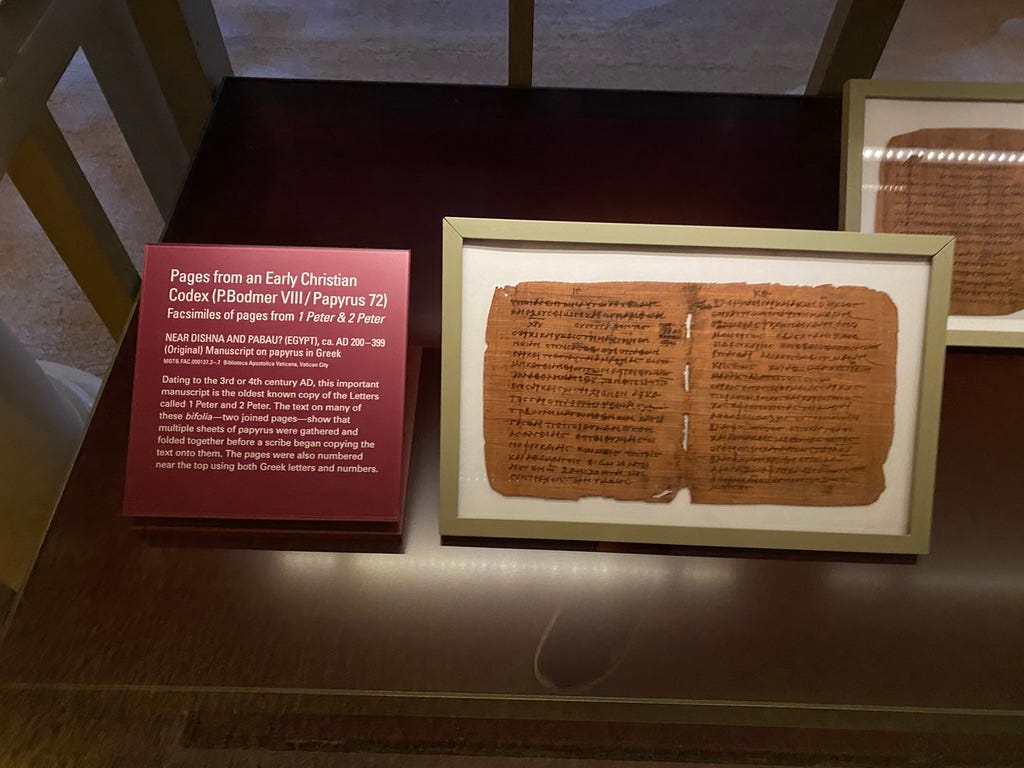
Yet, both historical & biblical evidences do not allow for this possibility:
Early Gospel Attestation. Critics of the gospel accounts will date their writing to 100+ years after the ministry of Jesus, indicating their unreliability to the true details of His life and death. Yet within the gospels themselves we see evidence for very early authorship. In three of the four gospel accounts, Jesus prophesies the destruction of the Jerusalem temple (Matthew 24:2; Mark 13:2; Luke 21:6). This event took place in A.D. 70, and is one of the most well established facts of ancient history.
If the Gospels had been written after this date, they would have certainly given Jesus credit for correctly predicting this event; nothing would have validated His prophetic ministry more! The fact that this validation is missing in the Gospel accounts (considering that the authors will make notes to the reader in regards to Jesus’ eschatological comments, see Matthew 13:14) strongly indicates that these biographies were written very early in the Christian tradition.
Jesus replied, “Yes, look at these great buildings. But they will be completely demolished. Not one stone will be left on top of another!”
Mark 13:2 (NLT)
Early Christian Creeds. Within the pages of the New Testament, we have what scholars have determined to be “pre-Pauline” early Christian creeds—beliefs about the risen Jesus that did not originate from Paul’s teaching, but ones that he references “passed on to him” about Christ. These are found in 1 Corinthians chapter 15 and Philippians chapter 2. Most scholars agree to date the 1 Corinthians 15 creed to within 5 years of the crucifixion of Jesus.
That’s remarkable, and demonstrates that the worship of Jesus by the early Christian community was almost immediate following His death—not a later developed legend embellished by lost details.
3 I passed on to you what was most important and what had also been passed on to me. Christ died for our sins, just as the Scriptures said. 4 He was buried, and he was raised from the dead on the third day, just as the Scriptures said.
1 Corinthians 15:3-4 (NLT)
Early Skepticism. The resurrection was not something people were expecting—and it wasn’t something they easily believed. The idea of resurrection was just as miraculous to believe back then as it was today. When the Apostle Paul preached in Athens on the Areopagus, the ancient cultural epicenter for new ideas, the leaders & philosophers were intrigued with his message—until he got to the resurrection. When they heard this, some “laughed in contempt,” yet others “wanted to hear more about this,” (Acts 17:32).
Additionally, when early believers were praying for Peter’s release from prison recorded in Acts chapter 12, they at first thought it was “his ghost” or “his angel,” when he came to the house and knocked on the door (Acts 12:13-15). Even today, some have claimed to have visions of deceased loved ones shortly after they die, and perhaps this was their initial surprised reaction (I had a next door neighbor who once thought her deceased aunt appeared to her in her mirror shortly after she passed).
This is to illustrate that early believers knew the difference between visions, ghosts, apparitions and resurrection — the claim that Jesus had physically come back from the dead. This claim is unique about Jesus only, and the early Christian community knew exactly what they were talking about when they said that Jesus was raised.
When they heard Paul speak about the resurrection of the dead, some laughed in contempt, but others said, “We want to hear more about this later.”
Acts 17:32 (NLT)
The best explanation of the facts is exactly what the Bible claims happened—that Jesus actually did rise from the dead!
“That is why, as a historian, I cannot explain the rise of early Christianity unless Jesus rose again leaving an empty tomb behind him.”
—N.T. Wright, New Testament Scholar
This is the explanation given by the New Testament authors, and it is the reason that they wrote about it!

“Therefore, it seems to me, the Christian is amply justified in believing that Jesus rose from the dead, and was who he claimed to be. But that entails that God exists.”
–Dr. William Lane Craig
20 But in fact, Christ has been raised from the dead. He is the first of a great harvest of all who have died.
1 Corinthians 15:20 (NLT)
16 Without question, this is the great mystery of our faith[a]:
Christ[b] was revealed in a human body
and vindicated by the Spirit.[c]
He was seen by angels
and announced to the nations.
He was believed in throughout the world
and taken to heaven in glory.
1 Timothy 3:16 (NLT)
30 The disciples saw Jesus do many other miraculous signs in addition to the ones recorded in this book. 31 But these are written so that you may continue to believe[d] that Jesus is the Messiah, the Son of God, and that by believing in him you will have life by the power of his name.
John 20:30-31 (NLT)
At some point, the evidence stops being something to analyze, and becomes something to respond to.
The resurrection isn’t just an idea to consider. It’s a reality to believe, live in, and experience.
Jesus is alive!
And He invites us—not just to understand that truth—but to trust Him with our lives.
Thank you, Jesus, that you have risen from the dead!
Prayer Spark:
Thank you, Jesus, that you have risen from the dead! Thank you for the evidence that you have left behind to give us confidence in the work you’ve done in our lives.
We pray that we would place our complete trust and confidence in you, our Lord, and that we would have life by the power of your name. Let us live the full life you have planned for us.
We give our past, present, and future to you. Grant us the assurance of salvation that is found in your everlasting name. In your name, Jesus, we pray, amen!
Then he said to Thomas, “Put your finger here, and look at my hands. Put your hand into the wound in my side. Don’t be faithless any longer. Believe!”
—Jesus, John 20:27 (NLT)
Explore Further:
The Resurrection Proclaimed
The Power of the Gospel
Early Christian Belief (Creeds & Confessions in Scripture)
Guarding the Message of the Gospel
Easter Evidences
A 6-Day Journey Through the Evidence for Jesus’ Resurrection
More Than Blind Faith
The Empty Tomb
Seen Alive
From Fear to Faith
Not a Legend
Living the Resurrection
Thanks for sharing